
Use a Last Epoch builder to record the character you actually have, then create a separate plan for the next upgrade. Last Epoch Tools provides a browser planner with skills, passives, equipment, idols, Blessings, Weaver Tree and conditional-stat controls. Start with the correct class, level and Season 5 data, and inspect every imported value before using a displayed calculation to make an equipment decision.
A planner is most useful when it answers a concrete question: which item fixes the resource problem, which passive completes an interaction, or which defense is lost after a swap. A fully equipped theoretical character is a useful destination, but it should not be mistaken for your current damage, survivability or farming capability.
Choose the tool for the task
For organizing a complete character and sharing its setup, Last Epoch Tools is a practical starting point. Its planner brings the main character systems into one view, with import and Save / Share controls. The related item and skill databases help you inspect the wording behind the selected pieces.
Last Epoch Planner is another option, derived from Path of Building and available as an offline program as well as a browser version. Its feature set includes passive trees, items, Blessings, skill trees and several stat calculations. It also documents partial support for modifiers and damage calculations, so check whether the interaction you care about is represented correctly.
Do not select a tool solely because it shows a DPS figure. A calculation can omit a trigger, conversion, conditional effect or skill-tree interaction and still produce a precise-looking number. The relevant question is whether that tool understands the parts of the build involved in your comparison.
For a first plan, prioritize a readable representation of the skills, passives and gear. Advanced calculations become useful after the setup is accurate. If an unfamiliar calculator cannot explain a modifier, keep the decision grounded in the item's wording and the working character rather than treating the unexplained number as authority.
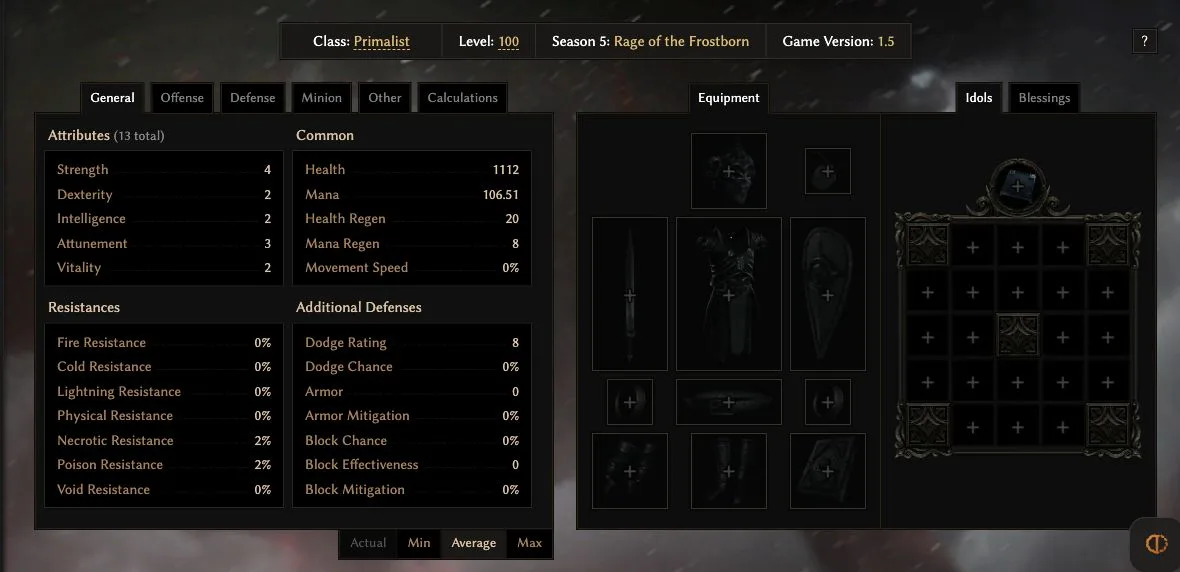
Record the current character first
Create a plan for the current character, using import where the chosen planner supports the appropriate character or build source. If importing is unavailable, enter the important equipment and allocations manually. Do not substitute ideal items just because they are faster to select.
Check these fields before comparing upgrades:
- Base class and chosen mastery.
- Current character level and available passive points.
- Specialized skills and the nodes actually allocated.
- Equipment bases, affix tiers and the item's actual roll values.
- Idol layout and the bonuses currently active.
- Active Blessings, rather than the best values available in their ranges.
- Weaver Tree allocations relevant to the intended activity.
- Conditional effects and buffs used in the displayed calculations.
An imported plan deserves the same review as a manually entered one. Check that every important item and specialization arrived correctly, especially after a respec or a recent gear change. An import is a starting representation, not proof that every possible interaction is calculated.
Save this current plan before experimenting. It becomes the reference for later comparisons and gives another player a useful picture of the actual problem. If your question is about mana depletion, a plan filled with future mana gear will hide the condition you need help resolving.
Define one damage engine before filling the slots
Start with the main skill or build-defining item. Read the skill's scaling tags and the item interaction, then select support around that engine. A hit-based lightning spell, a melee void attack and a poison damage-over-time effect need different offensive plans even if several generic damage modifiers appear on the same equipment.
Conversion is especially important. When a skill changes damage type through a node, read the conversion text and inspect the resulting setup. Do not assume every original damage bonus or unrelated item conversion applies in the same way. A planner should help make the interaction visible, not encourage you to skip the wording.
Assign a role to each supporting skill. You might need movement, recovery, a defensive cooldown, a debuff or a trigger. Filling five specialization slots with attractive damage skills can leave the build without a way to recover or maintain its resource loop.
Choose passives that complete those roles and meet the real unlock requirements. Threshold bonuses require the stated allocation, while a planner displaying a finished tree does not tell you that an early character can reach every node immediately. Build the functional path before spending spare points on isolated bonuses.
If the concept depends on a unique, keep that condition explicit in your own planning. A rare item with similar generic stats may not reproduce the unique effect. The starter plan must either include the required item or use a different engine until you obtain it.
Enter equipment with realistic values
Use the item base you own and the actual affix tiers and rolls. The planner's minimum, average and maximum views can help compare possibilities, but switch back to the real values when evaluating the current character. Maximum rolls on every slot describe a different setup from a mixture of ordinary campaign items.
For the next upgrade, select an item you can reasonably obtain or craft. A useful exalted item with health and the required damage affix may be a better immediate target than a rare unique with several ideal legendary transfers. Planning the obtainable item gives you a concrete filter and crafting direction.
When adding Legendary Potential transfers to a theoretical unique, account for the donor and crafting conditions. Do not assume all desired donor affixes appear simply because the planner lets you add them. The finished theoretical item and the process needed to obtain it are separate concerns.
Inspect tradeoffs across the whole character. Replacing a ring may raise damage while removing a resistance, mana recovery or health. The item is only an upgrade when the remaining setup can absorb that loss or another slot repairs it.
Avoid filling every empty slot with a famous unique. Each should have a role: enabling the engine, adding a specific interaction, supplying recovery or solving a defensive constraint. A coherent mixture of ordinary and unique equipment is more useful than a collection of expensive items that leaves the resource loop unfinished.
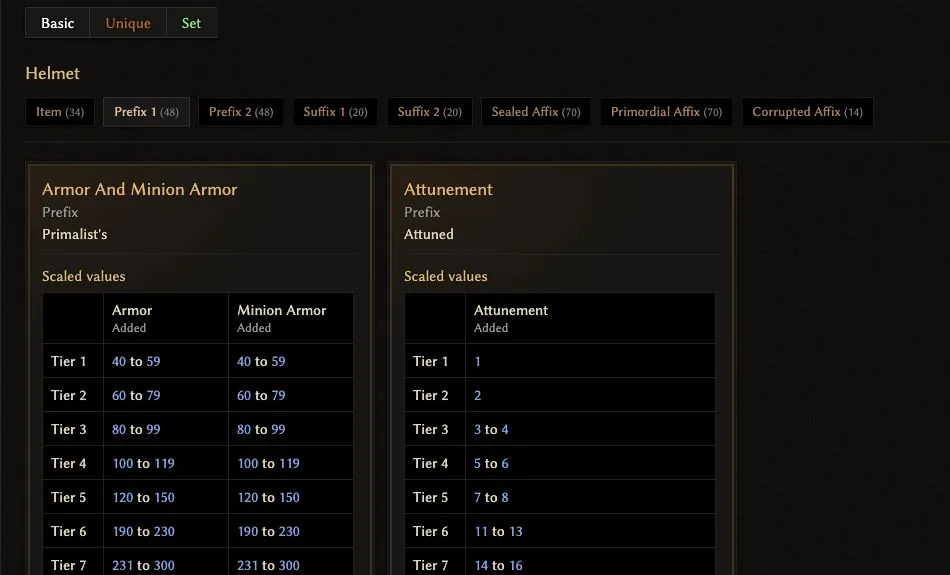
Compare upgrades under matching conditions
Keep the same level, enemy assumptions, buffs and conditional effects when comparing two items or allocations. A comparison is meaningless if one plan has every temporary effect active and the other represents an unbuffed character.
Inspect Conditions and Buffs rather than leaving their defaults unquestioned. A bonus that requires recent movement, standing still, a particular ailment or a resource threshold should only be counted in the situation where that condition is met. Consider both the favorable state and the moments when it is absent.
For a simple item comparison:
- Save the current character as the reference.
- Create a separate copy for the candidate upgrade.
- Change the relevant item and any directly required supporting allocation.
- Keep unrelated conditions identical.
- Compare damage, resources and defenses together.
- Identify the new gap created by the replacement.
- Decide whether the character can solve that gap with available gear.
This method keeps a conditional damage gain from concealing a loss in survivability. It also makes the next equipment task obvious. If a new weapon needs more mana recovery, the plan should show that requirement before you change the live character.
Do not present a planner's total as measured gameplay performance. Combat movement, target availability and temporary-effect uptime affect the result. Use the calculation to understand the direction of a change, then evaluate whether the real rotation can maintain the conditions behind it.
Build separate leveling and transition plans
A leveling plan should use the skills and items available during that stage. A transition plan should explain which interaction becomes possible after a required item or unlock. An aspirational plan can show the eventual equipment destination, but should remain separate from both.
For example, a Spark Charge Runemaster that depends on Fragment of the Enigma should not describe a generic early Mage as already having that engine. Likewise, a Warrior's Fury Warpath plan needs mana and channel-cost support that a new Sentinel may not possess. The planner can represent the destination, while the progression plan preserves the working starter.
Use the actual level and quest rewards when entering the early passive budget. Fifteen campaign bonus passive points and eight idol slots are rewards to verify, not amounts to assume a new character already has. The idol layout should fit the space available at that stage.
For a transition, identify the minimum functioning changes. Equip the build-defining item, establish its required skills and support, and keep defenses intact. Avoid changing every item, specialization and passive simultaneously if a smaller change can establish the engine.
Keep the old plan accessible after the swap. If the replacement stalls, the comparison shows what changed: resource expenditure, recovery, defenses or an inactive interaction. That is more useful than rebuilding the previous character from memory while the new one struggles.
Use idols and Blessings to finish the plan
Enter the idols that fit the available grid and provide the effects you need. Larger idols can supply important class interactions, while smaller pieces can fill resistance or other gaps. The arrangement should fit the current space rather than an ideal completed grid you have not unlocked yet.
Check every idol's condition. A chance to trigger a skill on a particular hit type requires the corresponding attacks, and an effect tied to a temporary state requires that state to be active. An attractive modifier that the build cannot trigger should not be treated as a functioning damage source.
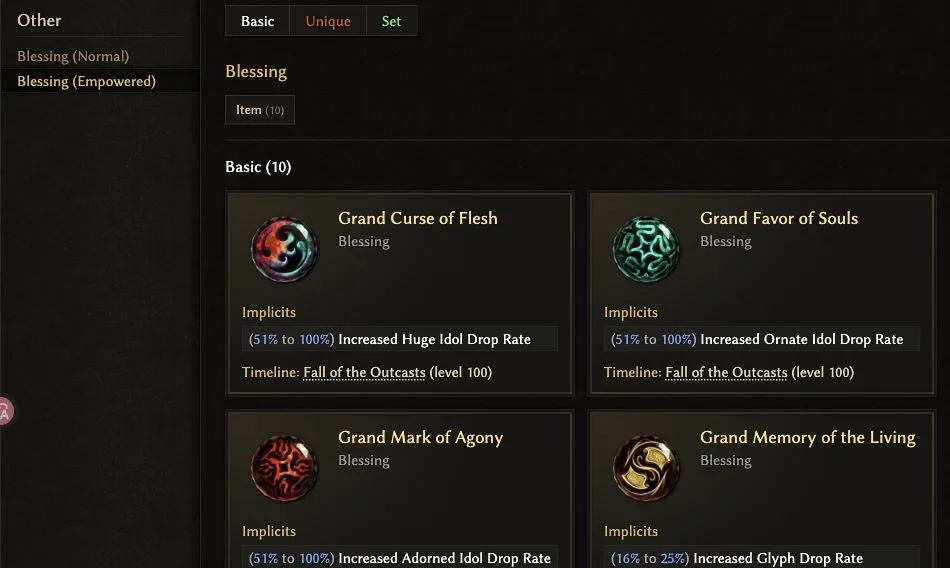
Blessings can supply recovery, defenses, offensive interactions or loot support. Enter the active roll rather than the maximum range by default. If a Blessing is the planned solution for a missing resistance, keep a temporary gear solution until that reward is actually selected.
Weaver Tree planning should follow the activity you intend to run. An allocation for a particular encounter farm can be useful in that context while adding little to another activity. Keep combat setup and farming bonuses understandable, so a shared plan does not imply that every displayed benefit applies everywhere.
Together, these systems should repair specific gaps instead of becoming a list of ideal bonuses. Review the complete character after each major replacement. A new damage idol can be worthwhile once the resistance it displaced has been covered elsewhere.
Share a plan that makes the question answerable
Use Save / Share to preserve the selected configuration, then reopen the saved representation and confirm it contains the intended gear, skills and passives. A shared build should describe the same character you are asking someone to evaluate.
When requesting feedback, state the activity and the failure pattern. “Mana runs out after the support sequence” is more useful than “my build is bad.” Likewise, specify whether the problem is pack clear, boss damage, recovery or a sudden death. The planner supplies the configuration; your description supplies the combat context.
Do not silently replace current items with dream upgrades before sharing. If you want feedback on a future plan, say that it is a future plan and keep the current character separate. Otherwise, a reviewer may try to explain behavior that the actual gear does not produce.
If a calculation disagrees with an item or skill's wording, inspect whether the modifier is supported and whether the relevant condition is active. Partial calculation support is a practical limit, not a reason to discard the entire plan. Keep the reliable parts for organization and comparison, and avoid drawing a numerical conclusion from an interaction the tool does not model.
The useful finished plan has a clear current state, one concrete next upgrade and the conditions needed to make that upgrade work. That is enough to guide equipment collection, crafting and a review without turning a theoretical maximum into a promise about the character you play.